This course introduces problem-solving techniques, critical thinking skills, algorithm development, and computer programming, using real-world problems. It focuses on the fundamentals of the concepts of programming, such as data representation, control structures, functions, arrays, and object-oriented programming techniques. Topics include: computer literacy, hardware, data representation, structured and object-oriented programming techniques, modularity and reusability, and testing and debugging techniques.
CSCI C101: COMPUTER PROGRAMMING I
Java is a powerful language that runs on practically every type of computer. It can be used to create large applications or small programs that are part of a Web site. This course will teach you procedural and object-oriented programming concepts by using Java program language. The topics would be covered are but not limited to Introduction to computers, Computer Program, Programming Process, Java Fundamentals, e.g., Data Types, Operators, Scope, Style, simple and nested Decision Structures, Pre and Post condition loops, nested loops, Methods and Problem Solving with Methods, Introduction to Class, Object, Object-Oriented Design, and elementary Data Structures.
CSCI C335:
COMPUTER STRUCTURES
Basic Concepts and Computer Evolution, Computer Abstractions, Measures of Performance, Assembly Language Programming, Instruction Set Architecture, Digital Logic, Computer Arithmetic, Datapath and Control, Pipelining, and The Memory Hierarchy.
INFO–I308: INFORMATION REPRESENTATION
This course covers the basic structure of information representation in digital information systems. Three aspects related to information representation will be discussed in this course. Firstly, the course begins with discussing low-level computer representations such as common character and numeric encoding. Secondly, the course presents an introductory study of common data structures and algorithms encountered in computing problems, focusing on methods of representing structured data, and techniques for operating on data structure. Finally, the course discusses XML and its related technologies as a medium for storing, displaying, and retrieving data.
INFO I450:
Design and Development of an Information System
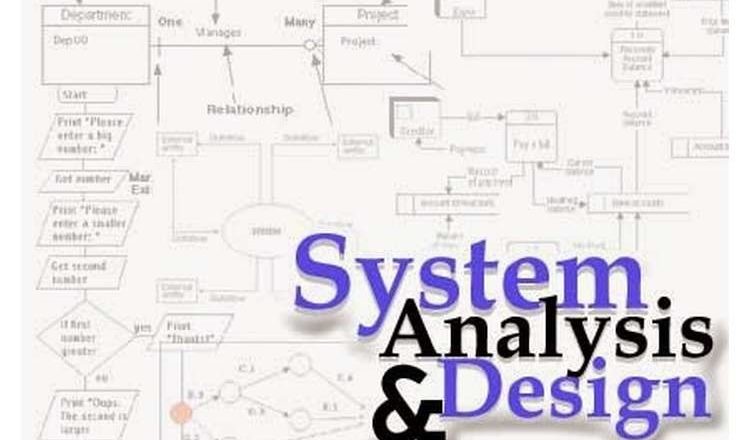
This course is one of the core curriculum courses for the Informatics program. This course will introduce the basic concepts underlying systems analysis and design, focusing on contextual inquiry/design and data modeling, as well as the application of those analysis techniques in the analysis and design of organizational information systems. This course position students to have common systems analysis backgrounds to allow them to then work in teams to create, document, and develop systems. Includes the study of human-computer interface issues that are essential to the successful implementation of any system. Besides learning “text facts,” the focus will be on three key career skills: critical thinking, oral communication, and professional work ethic.
INFO I451:
Design and Development of an Information System
This is the second course in the capstone sequence. Students work on capstone projects in supervised teams that provide solutions for real-world problems. This course is an introductory course in full stack system development (front-end, database, and back-end). Students will design and implement a full stack system for a business that has been selected and documented in INFO I450. For front-end development, teams are open to use any technology, e.g., React, Angular, or plain HTML and CSS, but they would be encouraged to use React. For the back-end development they will be using Node.js. For the database design, they would be using one of the leading cross platform NoSQL databases, i.e., MondoDB.
INFO I101: INTRODUCTION TO INFORMATICS
As an introductory course, it allows you to develop an assortment of computer-based skills, including a broad range of terminology. Topics include the history of computers, personal computers, current computer terminology, computer software, hardware, computer networks, web and internet, and the social issues related to computers and technology. It will help you develop your capabilities in problem-solving with information technology. Laboratory sessions include multiple hands-on activities, such as MS Office applications (Access database and Excel spreadsheets), basic programming on a robot, basic programming concepts through Raptor, interesting encryption and decryption experiments, and HTML exercises.
INFO C 307 : DATA REPRESENTATION
& ORGANIZATION
A fully asynchronous online course. This course covers the basic structure of information representation in digital information systems. Three aspects related to information representation will be discussed in this course. Firstly, the course begins with discussing low-level computer representations such as common characters and numeric encoding. Secondly, the course presents an introductory study of common data structures and algorithms encountered in computing problems, focusing on methods of representing structured data, and techniques for operating on data structure. Finally, the course discusses XML and its related technologies as a medium for storing, displaying, and retrieving data.
McMaster University
2GA3: COMPUTER ARCHITECTURE
The purpose of this course is to cultivate an understanding of modern computing technology through an in-depth study of the interface between hardware and software. The course calendar includes the following content: Measures of performance, instruction set architecture, computer arithmetic, datapath and control, pipelining, the memory hierarchy, I/O systems, multiprocessor systems, multimedia extensions and graphic processors.
2C03: DATA STRUCTURES AND ALGORITHMS
The course gives students the tools analyze the performance of algorithms using common tools such as counting primitive operations, asymptotic analysis with BigOh (and its relatives). Detailed analysis of recursive algorithms is provided. Complexity analysis and NP hard and complete problems are introduced. Basic ADTs are discussed along with their implementation using arrays and linked lists. The utility of trees (such as heap sorting) is described and analyzed. Sorting with divide and conquer approaches such as merge and quick sort are detailed. Algorithms that operate on graphs are also included – breadth and depth first searching and Dijkstra’s algorithm.
Seneca College
WEB322 - Web Programming Tools and Frameworks
The modern world deploys its software applications on the web, because of the web’s scale, reach, and ease of use. This course teaches students to design and create simple web applications and services, in JavaScript, using widely-used and powerful tools and frameworks. The major topic themes of this course include a study of the web as a programming platform, server and client programming techniques, an introduction to data storage schemes, and an introduction to security.
IPC144 - Introduction to Programming Using C
This course covers the fundamental principles of computer programming, with an emphasis on problem solving strategies using structured programming techniques. The C programming language, which is widely used and forms the syntactical basis for object-oriented languages such as C++, C#, and Java, is used to introduce problem analysis, algorithm design, and program implementation. Students work in a cross-platform environment.
OOP345 - Object-Oriented Software Development Using C++
This subject expands the student’s skill-set in object-oriented programming and introduces the student to threaded programming. The student learns to model relationships between classes using containers, inheritance hierarchies and polymorphism in the C++ programming language and to write C++ programs that execute on multiple threads.
OOP244 - Introduction to Object Oriented Programming
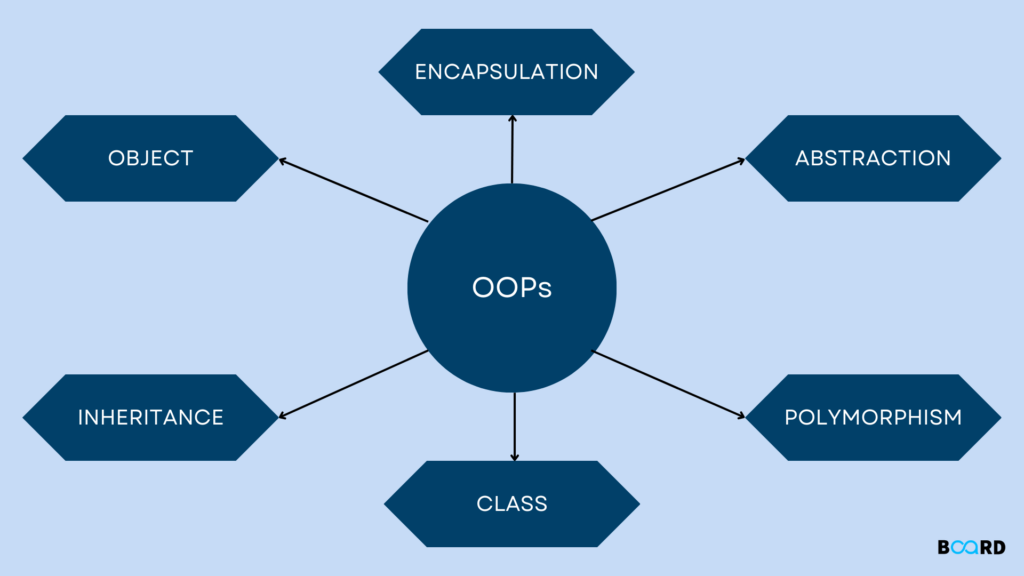
This subject introduces the student to object-oriented programming. The student learns to build reusable objects, encapsulate data and logic within a class, inherit one class from another and implement polymorphism. This subject uses the C++ programming language exclusively and establishes a foundation for learning system analysis and design and more advanced concepts as implemented in languages such as C++, Java, C# and Objective-C.