Hello
Innovation and Teaching are my passion. Currently, I am working as an Assistant Professor of Computer Science and Informatics at Indiana University Kokomo. My teaching experience comprises different-level diverse classrooms. The primary goal of my CS Innovation research group is to foster CS Education and Health Sciences.
I have also co-founded a software company. The primary goal of this company is to promote innovation and build a bridge between industry and academia.
On top, I am involved with a non-profit organization (eutb.ca); dedicated to financially assisting the underprivileged talents of Bangladesh to continue their education.
Alongside Academic degrees, I have completed the Mitacs Project Management Certification I and II.
- Course List
- Teaching Philosophy
- Students’ Commentary
- Diversity Statement
Indian University Kokomo
CSCI B100: PROBLEM SOLVING USING COMPUTERS
This course introduces problem-solving techniques, critical thinking skills, algorithm development, and computer programming, using real-world problems. It focuses on the fundamentals of the concepts of programming, such as data representation, control structures, functions, arrays, and object-oriented programming techniques. Topics include: computer literacy, hardware, data representation, structured and object-oriented programming techniques, modularity and reusability, and testing and debugging techniques.
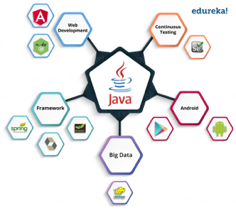
CSCI C101: COMPUTER PROGRAMMING I
Java is a powerful language that runs on practically every type of computer. It can be used to create large applications or small programs that are part of a Web site. This course will teach you procedural and object-oriented programming concepts by using Java program language. The topics would be covered are but not limited to Introduction to computers, Computer Program, Programming Process, Java Fundamentals, e.g., Data Types, Operators, Scope, Style, simple and nested Decision Structures, Pre and Post condition loops, nested loops, Methods and Problem Solving with Methods, Introduction to Class, Object, Object-Oriented Design, and elementary Data Structures.

CSCI C335: COMPUTER STRUCTURES
Basic Concepts and Computer Evolution, Computer Abstractions, Measures of Performance, Assembly Language Programming, Instruction Set Architecture, Digital Logic, Computer Arithmetic, Datapath and Control, Pipelining, and The Memory Hierarchy.
INFO–I308: INFORMATION REPRESENTATION
This course covers the basic structure of information representation in digital information systems. Three aspects related to information representation will be discussed in this course. Firstly, the course begins with discussing low-level computer representations such as common character and numeric encoding. Secondly, the course presents an introductory study of common data structures and algorithms encountered in computing problems, focusing on methods of representing structured data, and techniques for operating on data structure. Finally, the course discusses XML and its related technologies as a medium for storing, displaying, and retrieving data.
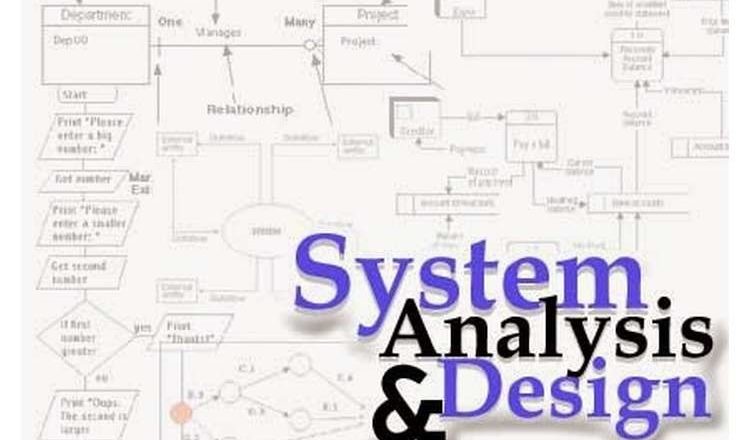
INFO I450: Design and Development of an Information System
This course is one of the core curriculum courses for the Informatics program. This course will introduce the basic concepts underlying systems analysis and design, focusing on contextual inquiry/design and data modeling, as well as the application of those analysis techniques in the analysis and design of organizational information systems. This course position students to have common systems analysis backgrounds to allow them to then work in teams to create, document, and develop systems. Includes the study of human-computer interface issues that are essential to the successful implementation of any system. Besides learning “text facts,” the focus will be on three key career skills: critical thinking, oral communication, and professional work ethic.
INFO I451: Design and Development of an Information System
This is the second course in the capstone sequence. Students work on capstone projects in supervised teams that provide solutions for real-world problems. This course is an introductory course in full stack system development (front-end, database, and back-end). Students will design and implement a full stack system for a business that has been selected and documented in INFO I450. For front-end development, teams are open to use any technology, e.g., React, Angular, or plain HTML and CSS, but they would be encouraged to use React. For the back-end development they will be using Node.js. For the database design, they would be using one of the leading cross platform NoSQL databases, i.e., MondoDB.
INFO I101: INTRODUCTION TO INFORMATICS
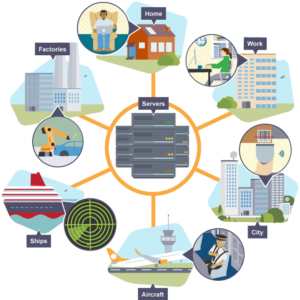
As an introductory course, it allows you to develop an assortment of computer-based skills, including a broad range of terminology. Topics include the history of computers, personal computers, current computer terminology, computer software, hardware, computer networks, web and internet, and the social issues related to computers and technology. It will help you develop your capabilities in problem-solving with information technology. Laboratory sessions include multiple hands-on activities, such as MS Office applications (Access database and Excel spreadsheets), basic programming on a robot, basic programming concepts through Raptor, interesting encryption and decryption experiments, and HTML exercises.
INFO C 307 : DATA REPRESENTATION & ORGANIZATION
A fully asynchronous online course. This course covers the basic structure of information representation in digital information systems. Three aspects related to information representation will be discussed in this course. Firstly, the course begins with discussing low-level computer representations such as common characters and numeric encoding. Secondly, the course presents an introductory study of common data structures and algorithms encountered in computing problems, focusing on methods of representing structured data, and techniques for operating on data structure. Finally, the course discusses XML and its related technologies as a medium for storing, displaying, and retrieving data.
McMaster University
2GA3: COMPUTER ARCHITECTURE
The purpose of this course is to cultivate an understanding of modern computing technology through an in-depth study of the interface between hardware and software. The course calendar includes the following content: Measures of performance, instruction set architecture, computer arithmetic, datapath and control, pipelining, the memory hierarchy, I/O systems, multiprocessor systems, multimedia extensions and graphic processors.
2C03: DATA STRUCTURES AND ALGORITHMS
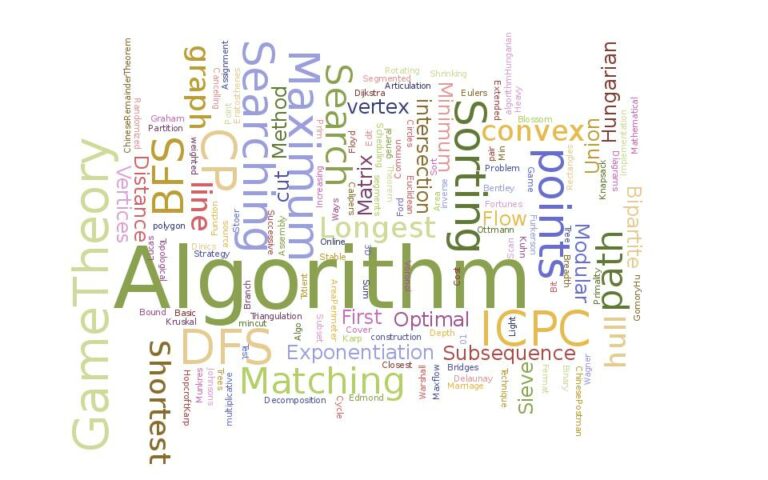
The course gives students the tools analyze the performance of algorithms using common tools such as counting primitive operations, asymptotic analysis with BigOh (and its relatives). Detailed analysis of recursive algorithms is provided. Complexity analysis and NP hard and complete problems are introduced. Basic ADTs are discussed along with their implementation using arrays and linked lists. The utility of trees (such as heap sorting) is described and analyzed. Sorting with divide and conquer approaches such as merge and quick sort are detailed. Algorithms that operate on graphs are also included – breadth and depth first searching and Dijkstra’s algorithm.
Seneca College
WEB322 - Web Programming Tools and Frameworks
The modern world deploys its software applications on the web, because of the web’s scale, reach, and ease of use. This course teaches students to design and create simple web applications and services, in JavaScript, using widely-used and powerful tools and frameworks. The major topic themes of this course include a study of the web as a programming platform, server and client programming techniques, an introduction to data storage schemes, and an introduction to security.
IPC144 - Introduction to Programming Using C
This course covers the fundamental principles of computer programming, with an emphasis on problem solving strategies using structured programming techniques. The C programming language, which is widely used and forms the syntactical basis for object-oriented languages such as C++, C#, and Java, is used to introduce problem analysis, algorithm design, and program implementation. Students work in a cross-platform environment.

OOP345 - Object-Oriented Software Development Using C++
This subject expands the student’s skill-set in object-oriented programming and introduces the student to threaded programming. The student learns to model relationships between classes using containers, inheritance hierarchies and polymorphism in the C++ programming language and to write C++ programs that execute on multiple threads.
OOP244 - Introduction to Object Oriented Programming
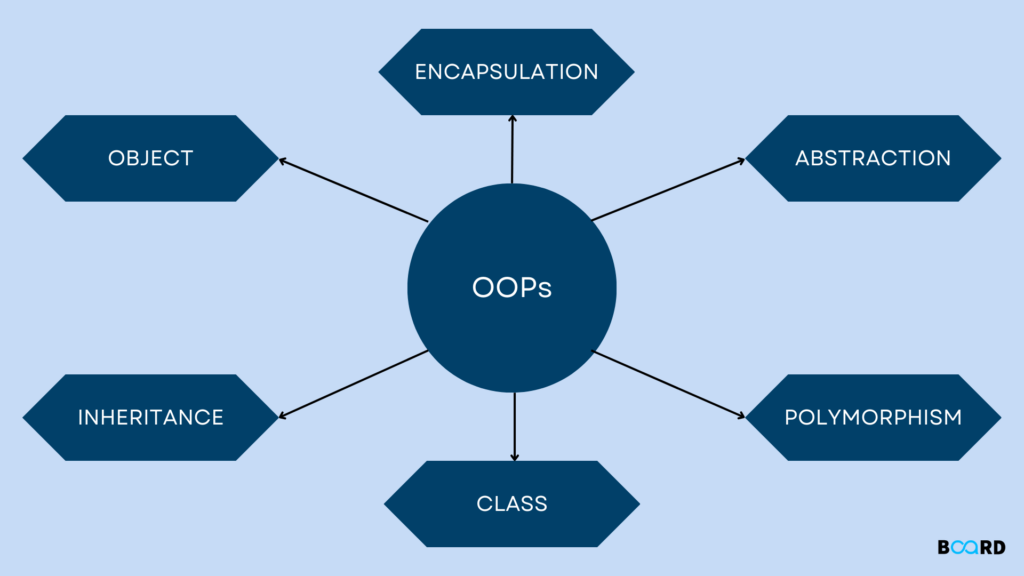
This subject introduces the student to object-oriented programming. The student learns to build reusable objects, encapsulate data and logic within a class, inherit one class from another and implement polymorphism. This subject uses the C++ programming language exclusively and establishes a foundation for learning system analysis and design and more advanced concepts as implemented in languages such as C++, Java, C# and Objective-C.
Teaching is a craft that involves two aspects: teaching and learning. How well a teacher teaches is important, but it is worthwhile only if the class can attain deep-rooted learning. Deep-rooted learning is directly proportional to a learner’s active involvement, and a teacher can escalate learning by introducing and regulating different types of activities and influencing the learner’s involvement in those activities.
I believe that a teacher’s role is not only to impart knowledge but also to facilitate active learning by creating a conducive environment that fosters student engagement. Therefore, my teaching approach emphasizes the use of various research-based teaching strategies and techniques, including interactive activities, discussions, and feedback, to enhance student learning and promote their involvement in the learning process.
My approach to teaching begins with a well-planned course that includes clear objectives, learning outcomes, and evaluation modes. I ensure that I am familiar with the classroom environment and the technologies available before the first lecture. In the first week of class, I focus on building a sense of community among students through activities that encourage interaction at all levels.
During lectures, I break up the content into smaller segments and use course-related activities to keep students engaged. I also conduct quizzes after each segment to assess students’ understanding and sometimes collect anonymous feedback at the end of a lecture.
I believe in keeping students informed through regular communication channels and providing effective feedback that is actionable, user-friendly, timely, ongoing, and consistent. I use personalized feedback and interactive rubrics when I find it appropriate within the learning management system to help students improve their work and learning outcomes.
My lectures are resourceful enough to comprehend the lecture content fully, but the spoken language is so temporary, and listening involves short-term memory. Moreover, it is always better to hear from more than one person. So, I prefer to provide as many references as possible and refer to them in my lecture and syllabus. Active reading and rereading of those materials along with opportunities to practice examples and exercises, will make the learning enjoyable, comprehensive, and long-lasting. I am available outside of class time to provide one-on-one interaction or small group sessions for in-depth learning.
I believe in the diversity and inclusion of all students, and I am committed to creating a safe and respectful learning environment.
Finally, I understand that any teaching philosophy and its implementation is class-specific, and I strive to continually improve my teaching methods to achieve a learned class. My goal is to inspire and empower my students to achieve their full potential and become lifelong learners.
My goal as a teacher is to inspire and empower my students to achieve their full potential. I believe that every student has unique strengths and abilities, and my role is to help them discover and develop these qualities. I strive to create a safe and inclusive learning environment where students feel comfortable expressing themselves and taking risks. I encourage active participation and collaboration in the classroom, and I provide constructive feedback that helps students improve their skills and build confidence. Ultimately, I hope to instill a love of learning and a lifelong curiosity in my students. My never-ending craving to compete with myself (make tomorrow better than today) and to attain a learned class made this instructor Nour, but this is just the beginning, and it will continue.
I am a citizen of a country where diversity and inclusion are considered among its core values. I was born in a small village in Bangladesh, and my early childhood, along with the unique experiences of village life, taught me many important lessons. From my middle childhood through my B.Sc. studies, I resided in various cities and towns. After completing my graduation, I spent two years in the capital city. From 2009 until December 2019, I lived in Canada, and from 2020 to the present day, I have been residing in the USA.
Throughout my life, I have encountered a wide array of diverse groups of people, including farmers, daily laborers, blacksmiths, shopkeepers, business magnates, professionals, the well-educated and the uneducated, Muslims, Garo, Hindus, Christians, Jews, Third Gender/Hijra, atheists, Asians, Africans, Middle Easterners, Europeans, Americans, and many more. The philosophy of life that I believe in has been shaped by various sources, but the diverse people and cultures I have come into contact with have played a prominent role.
I have experienced poverty and realized that the desire to accumulate wealth knows no bounds. It has become clear to me that true happiness comes from inner peace and contentment.
In Bangladesh, the education system is nearly cost-free; however, many families still struggle to cover the educational and emergency medical expenses of their members. To inspire change, during my first year of undergraduate studies, I co-founded an organization called “Organization for Helping Together Among the Students” (OHTAS) and served as its president for two consecutive years.
Upon arriving in Canada, I joined forces with a group of fellow Bangladeshi graduate students to establish EUTB (Education for Underprivileged Talents of Bangladesh – https://eutb.ca), aimed at providing financial assistance to underprivileged students in Bangladesh, enabling them to pursue their education. Since its inception, EUTB-Canada has awarded scholarships to several hundred students and currently supports 14 scholars.
During my time in Canada, I was affiliated with institutions such as Brock University, Humber College, McMaster University, and Seneca College in various teaching and learning roles. All of these institutions have robust departments and offices dedicated to fostering diversity and inclusion. They actively promote and provide guidance, advice, and consultations to students, staff, and faculty members on various issues, including but not limited to discrimination, harassment, and sexual violence. Additionally, these institutions offer accessibility services to support students with special needs. In my teaching career, I have had the privilege of successfully working with numerous specially-abled students, including those who are visually impaired.
However, data analysis research conducted by my lab on the records of 27,000 students reveals that minority students, including females, first-generation students, Hispanic students, Native American students, Native American females, African American students, Asian students, students aged 22-25, and financially challenged students, experience significantly lower success rates compared to the general student population. In most cases, the solution lies in providing them with extra care and guidance to unlock their potential and help them overcome their challenges, bringing them one step closer to success. I am unwaveringly committed to working with and providing individualized support to students, breaking the initial barriers, and establishing a comfortable rapport right from our first interaction, whether it be during a course lecture or research.
By birth, I am a citizen of Bangladesh, where, in terms of ethnicity, I belong to the largest demographic group. However, in Canada and the USA, I became part of a minority group. This remains the case in my current residence, where I represent less than 1% of the population. I firmly believe that diversity is a strength, and inclusion allows us to learn from one another, ultimately making us better human beings. My dedication lies in advancing equity and inclusion by fostering a safe, open, and respectful classroom environment and by nurturing a sense of collegiality among faculty and staff.